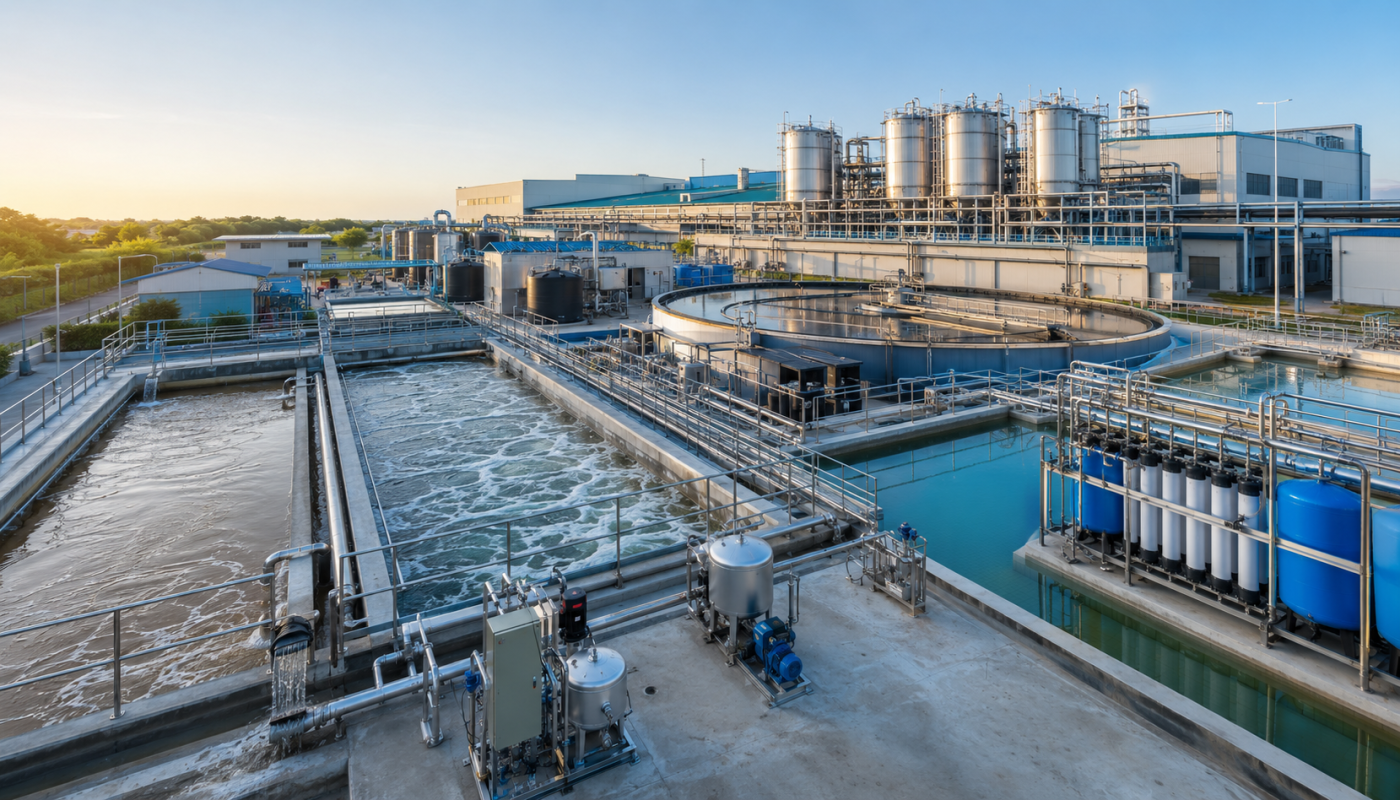
ETP for Food Industry in Gujarat: Complete Guide for Gujarat Processing Units
Food and beverage processing generates some of the highest-strength industrial wastewater of any sector — loaded with organic matter, oils and grease, suspended solids, and fluctuating pH from washing, cooking, and cleaning operations. Treating it wrong doesn't just risk a GPCB compliance notice; it risks odor complaints, drain blockages, and treatment systems that simply can't keep up with your production volume.
If you're evaluating an effluent treatment plant for a food processing unit — whether it's dairy, beverage, bakery, meat/seafood processing, or general food manufacturing — this guide covers what makes food industry effluent different, the treatment stages that actually work, and what to look for in an ETP supplier.
Why Food Industry Effluent Is Different
Food processing wastewater is often described as "high-strength," and for good reason. Compared to typical industrial effluent, it usually carries:
- High BOD and COD — organic load from food residues, sugars, starches, and proteins that break down biologically, consuming large amounts of oxygen in the process
- Oil and grease — especially from cooking, frying, dairy, and meat processing operations, which can coat and clog conventional treatment systems if not removed early
- Fluctuating flow and load — production shifts, cleaning cycles (CIP — clean-in-place), and seasonal processing volumes mean effluent characteristics change hour to hour, not just day to day
- Variable pH — swinging between acidic and alkaline depending on the cleaning agents and processing stage
- Suspended solids — food particles, pulp, and processing residue
This combination means a generic ETP design borrowed from another industry often underperforms. Food industry effluent treatment needs to be engineered around these specific characteristics from the start.
Core Treatment Stages for Food Industry ETP
1. Screening and oil/grease removal The first line of defense — coarse screens remove solid food waste, followed by grease traps or dissolved air flotation (DAF) units to skim oil and fat before they interfere with downstream biological treatment.
2. Equalization Given how much food industry flow and load fluctuates through the day, an equalization tank is essential — it buffers these swings so the treatment system downstream receives a more consistent feed rather than being overwhelmed during peak production or CIP cycles.
3. Primary treatment Physical/chemical treatment — coagulation and flocculation — to settle out remaining suspended solids and reduce load before biological treatment.
4. Biological treatment This is where most of the BOD/COD reduction happens, and it's the stage most specific to high-strength food effluent. Common approaches include:
- Anaerobic treatment (UASB or similar) as a first biological stage for very high-strength effluent, which also generates biogas as a byproduct in some setups
- Aerobic treatment (activated sludge, MBBR, or SBR) to further reduce organic load and meet discharge standards
- Many food industry ETPs use a combined anaerobic-aerobic approach specifically because single-stage biological treatment often can't handle the organic load food effluent carries
5. Tertiary treatment/polishing Filtration and disinfection to meet final discharge or reuse standards, especially important if treated water is being reused for washdown or non-process purposes.
6. Sludge handling Food industry ETPs generate significant biological sludge given the high organic load — proper dewatering and disposal (or, in some cases, resource recovery) needs to be part of the design, not an afterthought.
What Biological Treatment Works Best for High-Strength Food Effluent?
This is one of the most common questions food processors ask, and the honest answer is: it depends on your specific effluent strength and production pattern, but a few principles hold generally:
- Very high-strength effluent (common in dairy, beverage, and meat processing) usually benefits from an anaerobic pre-treatment stage before aerobic polishing — trying to handle very high BOD/COD loads with aerobic treatment alone typically requires oversized systems and higher energy costs
- Moderate-strength effluent may be adequately treated with aerobic systems alone, particularly MBBR or SBR configurations that handle load variability well
- Flow equalization matters more here than in most industries — food processing's batch-driven, shift-based operations create load swings that can destabilize biological treatment if not buffered properly
The right answer for your facility depends on lab-tested effluent characteristics (BOD, COD, oil/grease, flow pattern) specific to your process — this is worth getting characterized before finalizing a system design rather than assuming a standard configuration will fit.
Choosing a Food Industry ETP Supplier
Not every ETP supplier has genuine food industry experience, and the gap shows up in system performance, not just on paper. A few things worth checking:
- Track record with food/beverage-specific effluent — ask for reference installations in dairy, beverage, or food processing specifically, not just general industrial ETPs
- Design for load variability, not just average flow — a system sized only for average conditions will underperform during production peaks and CIP discharge spikes
- Oil and grease pre-treatment capability — this is frequently underdesigned by suppliers without food industry experience, leading to downstream fouling
- Odor control considerations — high-strength organic treatment can generate odor if not managed properly, which matters for facilities near residential areas or other operations
- Compliance documentation support — your supplier should be able to support your GPCB Consent to Establish/Operate documentation with accurate technical schematics of the actual system installed
Compliance Considerations for Food Processing Units
Like textile processing, food and beverage manufacturing falls under GPCB's consent framework, and depending on scale and process, most food processing units fall under Red or Orange category due to the organic load in their effluent. This means CTE and CTO requirements apply, with your ETP's pollution control plan and technical schematic forming a core part of that documentation — the same principles covered in our guide to GPCB Consent to Operate apply here, with effluent characteristics specific to food processing driving the technical details.
Frequently Asked Questions
What makes food industry wastewater different from other industrial effluent? Food processing effluent typically carries high BOD/COD from organic matter, significant oil and grease, fluctuating flow tied to production and cleaning cycles, and variable pH — a combination that requires treatment systems specifically engineered for these characteristics rather than a generic industrial ETP design.
What biological treatment works best for high-strength food industry effluent? Very high-strength effluent generally benefits from anaerobic pre-treatment followed by aerobic polishing, while moderate-strength effluent may be adequately handled by aerobic systems like MBBR or SBR alone. The right choice depends on lab-tested effluent characteristics specific to your process.
Do food processing units need GPCB Consent to Operate? Most food and beverage processing units fall under Red or Orange category due to organic effluent load, meaning CTE and CTO are required, similar to textile processing units.
How do I know if my current ETP is undersized for my food processing operation? Common signs include treated effluent failing to meet discharge norms during production peaks, frequent odor issues, sludge handling problems, or a system that performs fine on paper but struggles with real production variability — a load and flow audit against your actual production pattern is the way to confirm this.
Need an ETP designed around your specific food processing effluent — not a generic industrial template? Talk to Renora Hydrotech's team for a food industry wastewater assessment.
