
Dissolved Air Flotation (DAF) System
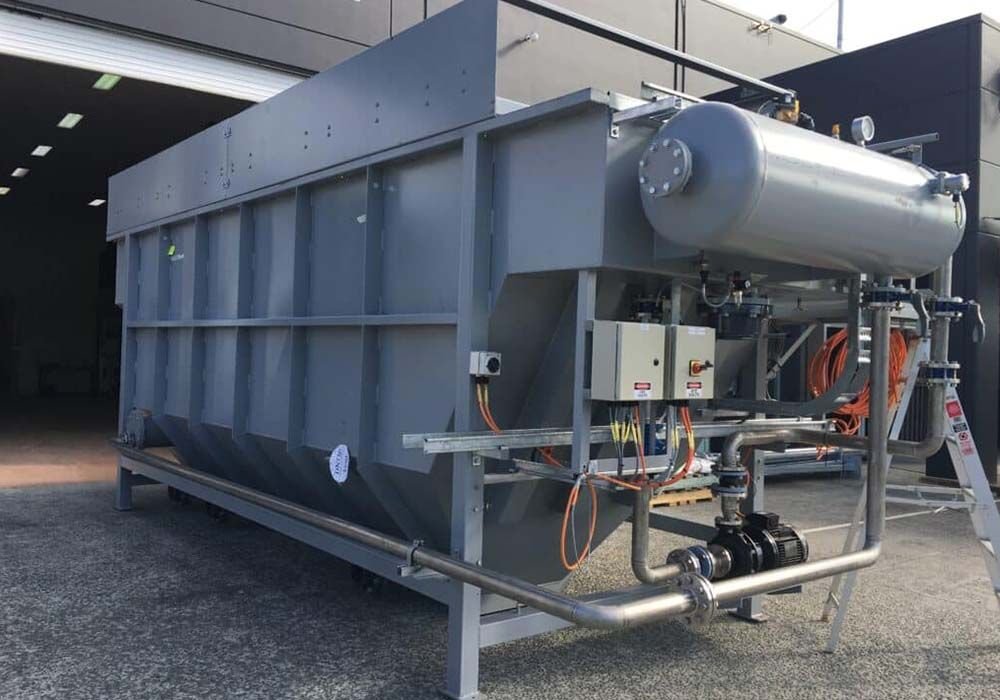
Dissolved Air Flotation (DAF) Systems for Industrial Wastewater Treatment in Surat, Gujarat
Removing oils, greases, and suspended solids efficiently is often the first critical step in treating industrial wastewater — and getting it right sets the stage for how well every downstream process performs. Renora Hydrotech's Dissolved Air Flotation (DAF) systems deliver highly effective solid-liquid separation, helping industries across Surat and Gujarat meet discharge standards while protecting downstream treatment equipment from overload.
What is a Dissolved Air Flotation System?
A DAF system is a wastewater treatment technology that removes suspended solids, oils, greases, and fine particulates by dissolving air into the water under pressure, then releasing it at atmospheric pressure within a flotation tank. This creates fine micro-bubbles that attach to suspended particles and oils, causing them to float to the surface where they're skimmed off as sludge — leaving clarified water to continue through the treatment process, typically toward biological treatment in an ETP
How the DAF Process Works
Air Saturation
A portion of clarified water is saturated with air under pressure in a dedicated saturation vessel.
Pressure Release
This air-saturated water is introduced into the flotation tank, where the sudden pressure drop releases the air as fine micro-bubbles.
Bubble-Particle Attachment
Micro-bubbles attach to suspended solids, oils, and grease particles in the incoming wastewater.
Flotation
The bubble-particle combinations rise to the surface, forming a floating sludge layer.
Skimming & Clarification
Surface skimmers remove the floated sludge, while clarified water exits from the bottom of the tank for further treatment or discharge.
Why Industries Choose Renora Hydrotech's DAF Systems
-
Effective Oil & Grease Removal — Particularly effective for effluents with high oil and grease content that conventional settling struggles to remove.
-
Reduced Load on Downstream Treatment — By removing suspended solids and oils early, DAF significantly reduces the organic and solid load reaching biological or [RO treatment](LINK: /service/ro-reverse-osmosis-plant) stages.
- Compact Footprint — DAF systems typically require less space and shorter retention time compared to conventional sedimentation-based clarifiers.
- Faster Treatment Cycle — Flotation occurs much faster than gravity settling, allowing for higher throughput in a smaller system footprint.
- Customizable Capacity — Systems designed and scaled to match your facility's flow rate and contaminant load.
Industries & Applications We Serve
- Textile dyeing and processing units
- Food processing plants (oil, grease, and organic load removal)
- Chemical manufacturing facilities
- Pharmaceutical industries
- Common Effluent Treatment Plants (CETPs) as a primary treatment stage
- Automotive and metal processing industries (oily wastewater treatment)
Our DAF System Design & Delivery Process
Effluent Characterization
We analyze your wastewater's oil, grease, and suspended solids content along with flow rate to determine the right system design.
Custom Engineering
Tank sizing, air saturation capacity, and retention time are engineered specifically for your effluent characteristics.
Fabrication & Quality Control
Systems built with corrosion-resistant materials suited for continuous industrial operation.
Installation & Commissioning
Complete on-site setup and integration with your existing treatment train (typically as a primary treatment stage ahead of biological or RO systems).
Ongoing Support
Maintenance, skimmer servicing, and performance monitoring to keep your DAF system operating efficiently.
Integration with Your Treatment Plant
DAF systems are most effective when positioned as a primary treatment stage — ahead of biological treatment, RO, or other polishing systems. By removing bulk oils, greases, and suspended solids upfront, Renora Hydrotech's DAF units help protect downstream equipment from fouling and reduce overall treatment costs across the complete ETP or STP
Frequently Asked Questions
What types of contaminants does a DAF system remove best?
DAF is particularly effective for oils, greases, fats, and suspended solids — contaminants that are difficult to remove through simple gravity settling.
How does DAF compare to conventional sedimentation tanks?
DAF treats water much faster than gravity-based sedimentation, requires less space, and is significantly more effective at removing lighter contaminants like oils and fats that tend to float rather than settle.
Can a DAF system be added to an existing ETP setup?
Yes, Renora Hydrotech regularly integrates DAF systems as a primary treatment stage for facilities looking to improve overall ETP performance and reduce load on downstream biological or RO systems.
Is DAF suitable for high oil-content wastewater like food processing effluent?
Yes — DAF is one of the most effective technologies specifically for high oil and grease content effluents typical in food processing, automotive, and metal industries.
Need a DAF system to reduce load on your existing treatment plant in Surat or Gujarat? Talk to Renora Hydrotech's team for a free effluent assessment.