
Effluent Treatment Plant (ETP)
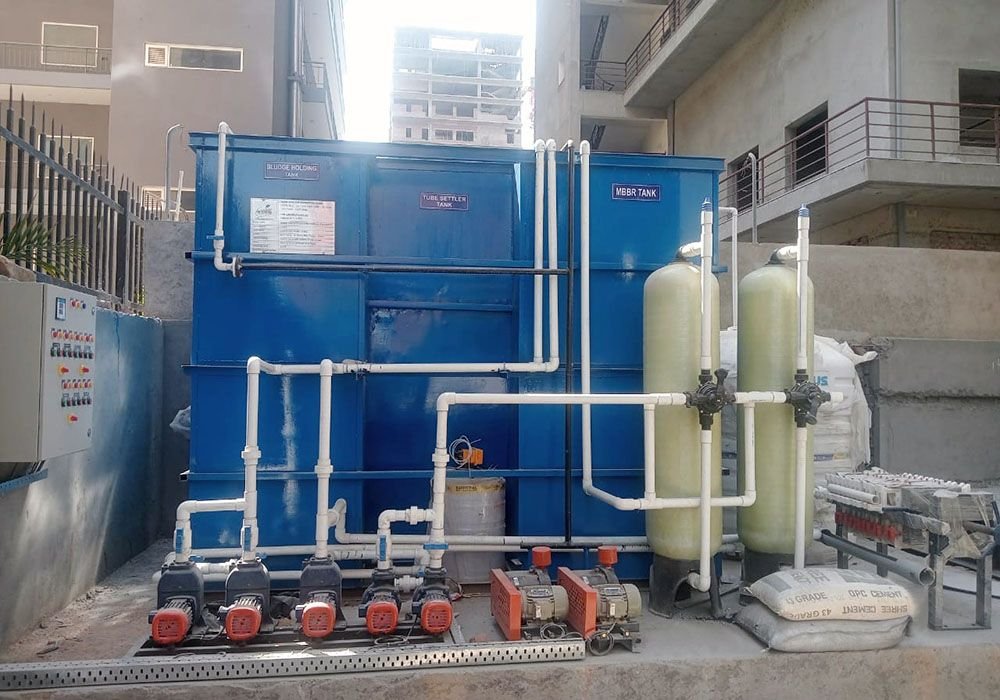
Effluent Treatment Plant (ETP) Manufacturer for Industrial & Textile Units in Surat, Gujarat
Every industry that generates wastewater faces the same fundamental challenge: treating effluent to meet regulatory discharge standards while managing costs and operational complexity. Renora Hydrotech designs, manufactures, and installs advanced Effluent Treatment Plants (ETP) engineered to treat diverse industrial wastewater streams, helping textile and process industries across Surat and Gujarat achieve GPCB compliance while protecting the environment.
What is an Effluent Treatment Plant?
An Effluent Treatment Plant is a system designed to treat industrial wastewater before it's discharged into the environment, reused within the facility, or sent for further processing. ETPs remove contaminants such as suspended solids, oils and greases, heavy metals, organic matter (BOD/COD), and other pollutants specific to an industry's processes — bringing wastewater within the discharge limits set by pollution control authorities like GPCB. Unlike an STP, which treats domestic sewage, an ETP is built around the specific chemical and industrial characteristics of your process wastewater.
How the ETP Treatment Process Works
Primary Treatment
Screening and equalization remove large debris and balance flow and load variations before further treatment.
Physicochemical Treatment
Coagulation, flocculation, and clarification or DAF remove suspended solids, oils, and colloidal particles.
Biological Treatment
Aerobic or anaerobic biological processes break down organic matter, reducing BOD and COD levels.
Tertiary Treatment
Filtration and disinfection polish the water further, removing remaining fine particles and pathogens.
Sludge Management
Sludge generated throughout the process is dewatered and handled for safe disposal or further processing.
Why Industries Choose Renora Hydrotech's ETP Systems
-
GPCB Compliance — Systems designed to meet Gujarat Pollution Control Board discharge norms, helping you secure and maintain Consent to Operate (CTO).
-
Industry-Specific Design — Every industry's effluent is different — we engineer treatment trains specific to your wastewater's characteristics, whether textile dyes, pharmaceutical residues, or food processing organics.
- Scalable Capacity — From small manufacturing units to large industrial facilities across Surat's GIDC belt, our ETP systems are sized to match your actual flow rate and pollutant load.
- Integration-Ready — ETP systems designed to work seamlessly with downstream RO, DM, and MEE systems for facilities pursuing water reuse or [Zero Liquid Discharge ZLD goals.
- Durable, Low-Maintenance Construction — Built with corrosion-resistant materials suited for continuous industrial operation with minimal downtime.
Industries & Applications We Serve
- Textile dyeing and processing units
- Pharmaceutical manufacturing
- Chemical and petrochemical industries
- Food and beverage processing
- Metal finishing and electroplating industries
- Common Effluent Treatment Plants (CETPs) for industrial clusters
Our ETP Design & Delivery Process
Effluent Characterization
We test your wastewater's BOD, COD, TSS, oil and grease content, and flow rate to understand your specific treatment needs.
Custom System Design
Treatment stages, tank sizing, and process selection (biological, physicochemical, or combined) are engineered based on your effluent profile and discharge targets.
Fabrication & Quality Control
Systems built using durable, corrosion-resistant materials designed for continuous operation under harsh effluent conditions.
Installation & Commissioning
Complete on-site installation, process startup, and performance testing before handover.
perational Support
Ongoing maintenance, GPCB compliance consultancy, and troubleshooting to keep your ETP running efficiently and within regulatory limits.
ETP as the Foundation of a Complete Treatment Train
An ETP rarely works in isolation — it's typically the first major treatment stage in a facility's overall water management strategy. Renora Hydrotech frequently designs ETP systems that feed into downstream RO plants for water recovery, and further into MEE systems for facilities working toward Zero Liquid Discharge. This integrated approach ensures effluent is not just compliant, but increasingly reused rather than discharged.
Frequently Asked Questions
What is the difference between an ETP and an STP?
An ETP treats industrial wastewater/effluent containing process-specific contaminants (chemicals, dyes, oils), while an STP treats domestic sewage from residential or commercial buildings — the treatment processes and design requirements differ significantly.
Is an ETP mandatory for all industries in Gujarat?
Most industries generating wastewater are required by GPCB to install an ETP and obtain Consent to Operate (CTO) before discharge — requirements vary based on industry category and pollution load.
How is an ETP system sized for a specific facility?
Sizing depends on your daily wastewater flow rate along with contaminant concentrations (BOD, COD, TSS) — we conduct effluent characterization to determine the right capacity and treatment stages needed.
Can an existing ETP be upgraded or expanded?
Yes, Renora Hydrotech regularly upgrades existing ETP systems to handle increased capacity, meet stricter discharge norms, or integrate additional treatment stages like DAF or biological treatment.
Does Renora Hydrotech help with GPCB approval after ETP installation?
Yes, we provide GPCB consultancy support, including documentation and compliance guidance, to help you secure Consent to Establish (CTE) and Consent to Operate (CTO).
Need an ETP designed around your specific effluent profile in Surat or Gujarat? Talk to Renora Hydrotech's team for a free effluent characterization and system recommendation.