
Common Effluent Treatment Plant (CETP)
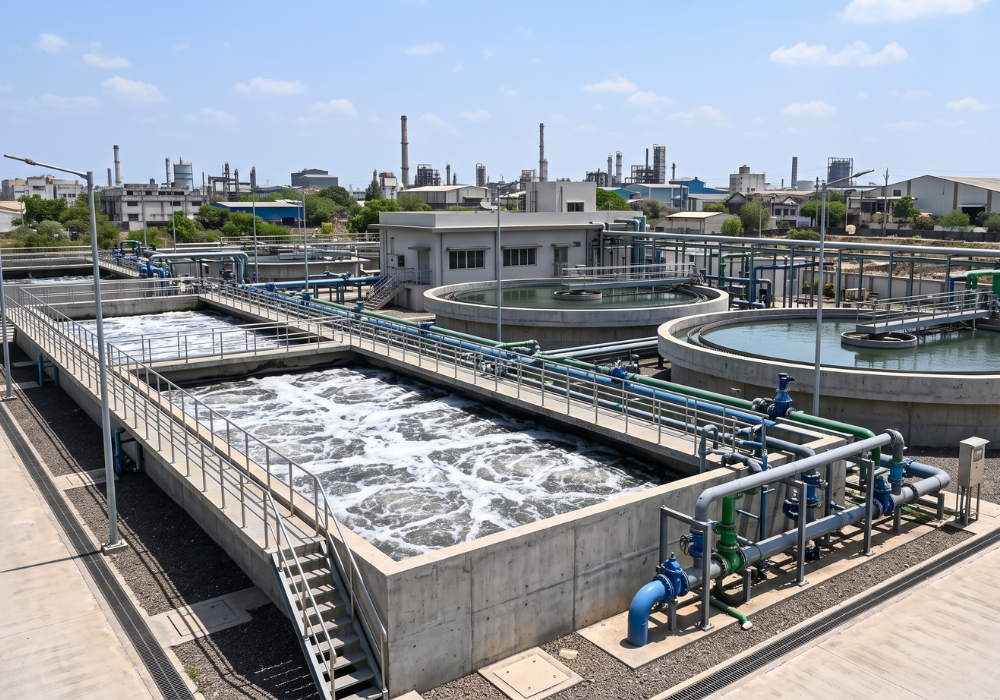
Common Effluent Treatment Plant (CETP) for Industrial Estates & GIDC Clusters in Surat, Gujarat
For small and medium industries operating within industrial estates or GIDC clusters, building an individual full-scale treatment plant isn't always practical or cost-effective. Renora Hydrotech designs and builds Common Effluent Treatment Plants (CETP) for industrial estates across Surat and Gujarat that collect and treat effluent from multiple factories centrally — enabling member industries to meet pollution control norms without the burden of investing in standalone treatment infrastructure.
What is a Common Effluent Treatment Plant?
A Common Effluent Treatment Plant is a centralized wastewater treatment facility that receives effluent from several member industries within an industrial zone through a shared conveyance network, treats it collectively, and discharges or reuses the treated water in compliance with pollution control norms. By pooling resources across multiple units, a CETP reduces the individual cost burden for each factory while ensuring consistent, professionally managed compliance for the entire industrial estate — an alternative to each unit installing its own ETP.
How the CETP Treatment Process Works
Common Collection & Conveyance
Effluent from member industries is collected through a shared conveyance network into the CETP facility.
Equalization
Incoming wastewater passes into an equalization tank, where flow rate and pollutant load variations from different member units are balanced before further treatment.
Primary Treatment
Screening, oil and grease removal, and primary clarification remove large debris, floating oils, and heavier suspended solids.
Secondary Biological Treatment
Aeration and clarification processes (using technologies such as MBBR or SBR) break down organic load, significantly reducing BOD and COD levels.
Tertiary Treatment
Pressure Sand Filtration and Activated Carbon Filtration polish the water further, removing remaining fine particles, color, and odor.
RO & ZLD Stages (as required)
Where discharge or reuse standards demand it, Reverse Osmosis reduces TDS levels, with Multi Effect Evaporator (MEE) or ATFD systems added for facilities requiring Zero Liquid Discharge compliance.
Sludge Handling & Disposal
Sludge generated across treatment stages is collected, dewatered, and disposed of safely.
Why Industrial Estates Choose Renora Hydrotech's CETP Solutions
- Cost-Effective Compliance — Member industries share treatment infrastructure costs, making pollution control compliance affordable even for small and medium enterprises.
- Handles Variable, Combined Loads — Engineered to manage fluctuating flow rates and mixed effluent characteristics from multiple industry types within the same estate.
- GPCB/CPCB Compliant Design — Systems designed to meet Gujarat Pollution Control Board and Central Pollution Control Board discharge norms.
- Modular & Scalable — Designed to expand in capacity as the industrial estate grows and more member units come online.
- Automation Ready — PLC-based automation with SCADA monitoring options for centralized oversight of plant performance.
- ZLD Compliant Where Mandated — Systems can be designed to meet Zero Liquid Discharge requirements for estates housing red-category industries.
Treatment Stages We Offer
- Common Collection & Conveyance System
- Equalization & Primary Treatment
- Biological Treatment (Aeration, MBBR, SBR)
- Secondary Clarification
- Tertiary Treatment (Pressure Sand Filter, Activated Carbon Filter)
- Reverse Osmosis (RO) for TDS Reduction
- Multi Effect Evaporator (MEE) / ATFD for ZLD Compliance
- Sludge Handling & Disposal System
Applications We Serve
- Industrial estates & GIDC clusters
- Textile & dyeing clusters
- Chemical & pharmaceutical zones
- Common industrial parks
- SME manufacturing clusters
Our CETP Design & Delivery Process
Cluster Effluent Assessment
We analyze combined effluent characteristics across member industries, including flow variability, contaminant load, and seasonal fluctuations.
Custom System Design
Treatment stages are engineered to handle the specific mix of industries within the estate, from textile dyeing to chemical processing.
Modular Engineering
Systems are designed with future expansion in mind, allowing capacity to scale as the industrial estate grows.
Installation & Commissioning
Complete on-site installation, integration with the estate's common conveyance network, and system commissioning.
Ongoing Operation & Maintenance Support
Continuous monitoring support, sludge management guidance, and maintenance services to ensure consistent compliance for all member industries.
Benefits of a CETP for Your Industrial Estate
- Cost-effective compliance for smaller industries
- Consistent effluent quality and monitoring across all member units
- Reduced individual investment burden compared to standalone treatment plants
- Centralized expertise and management, reducing compliance risk for the entire estate
- Scalable infrastructure that grows alongside the industrial zone
Frequently Asked Questions
What's the difference between a CETP and an individual ETP?
An ETP treats wastewater for a single facility, while a CETP is a centralized facility that collects and treats combined effluent from multiple industries within an estate or cluster — reducing individual infrastructure costs while ensuring consistent compliance across all member units.
Which industries typically use a CETP instead of their own ETP?
Small and medium enterprises within industrial estates, GIDC clusters, and textile or chemical processing zones commonly rely on CETPs, since building individual full-scale treatment plants isn't always cost-effective at their scale.
Can a CETP handle effluent from different types of industries at once?
Yes, CETPs are specifically designed with equalization and flexible treatment stages to manage combined, variable effluent loads from different industry types operating within the same estate.
Is ZLD required for all CETPs?
Not always — ZLD compliance depends on the pollution category of member industries within the estate. Where red-category or high-TDS industries are present, GPCB/CPCB may mandate ZLD-compliant CETP design.
How does a CETP reduce costs for member industries?
By sharing centralized treatment infrastructure, equipment, and operational management across multiple industries, per-unit compliance costs are significantly lower than each factory building and operating its own full-scale treatment plant.
Can an existing CETP be expanded to serve more industries?
Yes, Renora Hydrotech designs CETP systems with modular, scalable architecture specifically so capacity can be expanded as more member units join the industrial estate.
Managing effluent for an industrial estate or GIDC cluster in Surat or Gujarat? Talk to Renora Hydrotech's team about a centralized CETP solution for your member industries.