
Demineralization System (DM / MB Plant)
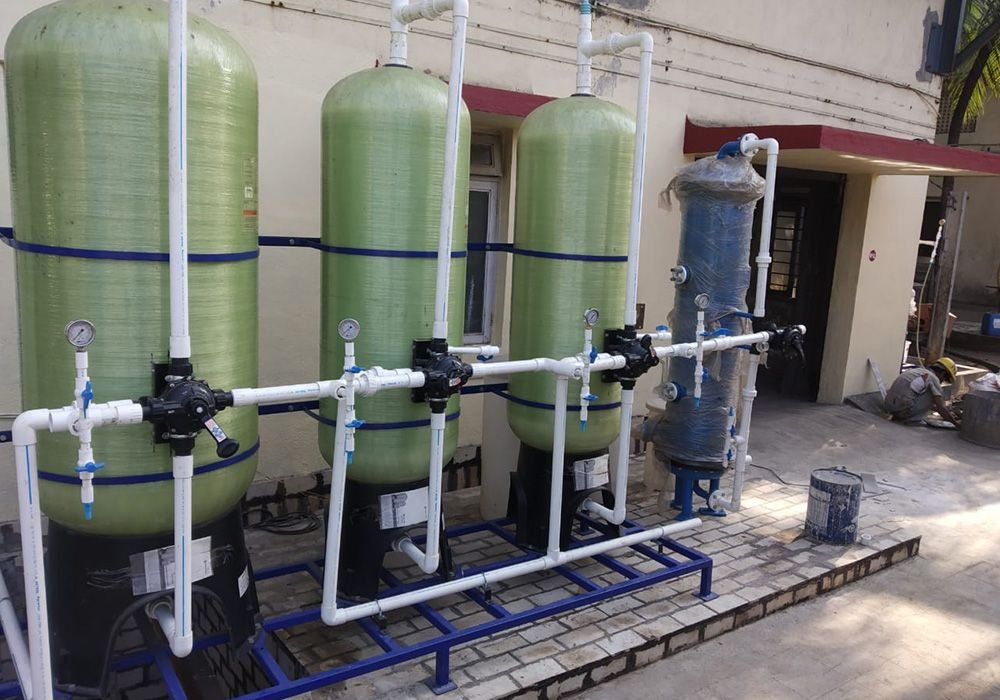
Demineralization (DM) & Mixed Bed (MB) Plants for High-Purity Water in Surat, Gujarat
Many industrial processes — from boiler feed water to pharmaceutical manufacturing — require water that's been stripped of virtually all dissolved minerals and ions. Ordinary filtration or even RO alone often isn't enough to meet these purity standards. Renora Hydrotech's Demineralization (DM) and Mixed Bed (MB) plants are engineered to deliver the high-purity water industries across Surat and Gujarat need for sensitive, high-precision applications.
What is a Demineralization System?
A Demineralization system uses ion exchange resins to remove dissolved salts, minerals, and ions from water — producing water with very low conductivity and near-zero mineral content. Unlike RO, which relies on membrane filtration, DM systems use cation and anion exchange resins to chemically strip charged particles, achieving a much higher level of purity suited for critical industrial uses.
A Mixed Bed (MB) Plant takes this a step further by combining cation and anion resins in a single vessel, polishing water to near-total purity — typically used as a final stage after primary DM treatment for applications demanding the strictest water quality standards.
How the DM/MB Process Works
Cation Exchange
Water passes through a resin bed that exchanges positively charged ions (like calcium, magnesium, sodium) for hydrogen ions.
Anion Exchange
Water then passes through a resin bed that exchanges negatively charged ions (like chlorides, sulfates) for hydroxide ions.
Mixed Bed Polishing
For applications needing ultra-high purity, water passes through a mixed bed vessel where cation and anion resins work together for a final purification step.
Regeneration
Once resins become saturated, they're regenerated using acid and caustic soda solutions to restore their ion-exchange capacity for continued use.
Why Industries Choose Renora Hydrotech's DM Plants
-
Ultra-High Purity Output — Achieves conductivity levels far lower than RO alone, critical for sensitive applications.
- Boiler Protection — Removing dissolved minerals prevents scale formation and corrosion in boilers, extending equipment life and improving efficiency.
- Customizable Capacity — Systems designed to match your facility's flow rate and purity requirements, from small process applications to large industrial boiler feed systems.
- Reliable Regeneration Systems — Designed for efficient resin regeneration cycles, minimizing downtime and chemical consumption.
- Durable Construction — Built with corrosion-resistant vessels and piping suited for long-term continuous operation.
Industries & Applications We Serve
- Boiler feed water treatment (power plants, textile mills, process industries)
- Pharmaceutical manufacturing requiring high-purity water
- Chemical processing plants
- Electronics and precision manufacturing
- Laboratories requiring deionized water
Our DM/MB Plant Design & Delivery Process
Water Analysis
We test your raw water source's mineral content, hardness, and TDS to determine the right resin configuration.
System Design
Cation, anion, and mixed bed vessel sizing is engineered based on your required flow rate and purity targets.
Fabrication
Vessels and piping are built using corrosion-resistant materials suited for continuous ion-exchange operation.
Installation & Commissioning
Complete on-site setup, resin loading, and system testing before handover.
Regeneration Support & Maintenance
Ongoing resin replacement, regeneration chemical supply, and system servicing to maintain consistent water quality.
DM Plant vs. RO Plant — Which Do You Need?
RO systems are effective for general desalination and reducing TDS for many industrial and drinking water uses. DM/MB systems go further, producing near-mineral-free water essential for boiler feed and pharmaceutical-grade applications. Many facilities use RO as a pre-treatment stage before DM/MB polishing to reduce the ion-exchange load and extend resin life — a combination Renora Hydrotech frequently designs and installs together.
Frequently Asked Questions
What's the difference between a DM plant and a Mixed Bed plant?
A DM plant uses separate cation and anion vessels in sequence, while a Mixed Bed plant combines both resin types in one vessel for a final, higher-purity polishing step — often used together for maximum purity.
How often do DM plant resins need regeneration?
This depends on raw water quality and daily water consumption, but typically resins are regenerated every few days to a couple of weeks in industrial settings — our systems are designed with regeneration frequency in mind based on your specific water source.
Can a DM plant work alongside an existing RO system?
Yes — in fact, pairing RO with DM/MB polishing is a common and efficient setup, as RO reduces the initial ion load, extending the life of your ion-exchange resins.
Is a DM plant necessary for all industries?
Not all — DM/MB systems are typically required where extremely low conductivity water is essential, such as boiler feed at higher pressures, pharmaceutical manufacturing, and precision electronics — RO alone is often sufficient for less demanding applications.
Need high-purity water for boiler feed or pharmaceutical-grade applications in Surat or Gujarat? Talk to Renora Hydrotech's team for a free water analysis.