
Sewage Treatment Plant
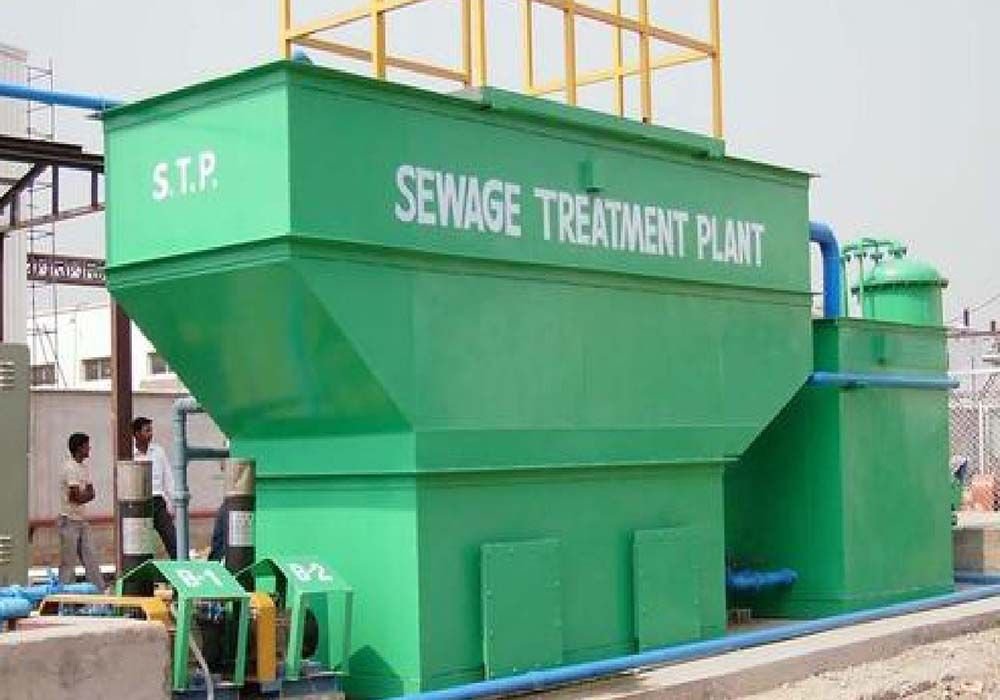
Sewage Treatment Plant (STP) Manufacturer for Residential & Commercial Projects
As urban development accelerates across Gujarat, managing sewage responsibly has become both a regulatory requirement and an environmental necessity. Renora Hydrotech designs, manufactures, and installs reliable Sewage Treatment Plants (STP) for hotels, hospitals, industries, residential colonies, IT parks, and commercial complexes — ensuring treated water meets discharge and reuse standards.
What is a Sewage Treatment Plant?
A Sewage Treatment Plant treats domestic wastewater — from bathrooms, kitchens, and washing areas — removing organic matter, suspended solids, and pathogens before the water is discharged or reused for purposes like gardening, flushing, or cooling tower makeup. Unlike industrial ETPs that handle process-specific chemical effluents, STPs are specifically designed around the characteristics of domestic sewage.
How the STP Treatment Process Works
- Screening & Primary Treatment — Removes large solids and grit, followed by primary settling to separate heavier suspended matter.
- Biological Treatment — Using technologies such as Sequential Batch Reactor (SBR), Moving Bed Biofilm Reactor (MBBR), or Extended Aeration, microorganisms break down organic matter, significantly reducing BOD and COD levels.
- Secondary Clarification — Treated water is separated from biological sludge in a settling stage.
- Tertiary Treatment & Disinfection — Filtration and chlorination or UV disinfection remove remaining fine particles and pathogens, making the water safe for reuse or discharge.
- Sludge Handling — Excess biological sludge is periodically removed and processed for safe disposal.
Why Choose Renora Hydrotech's STP Systems
- Reliable Compliance — Systems designed to meet GPCB and CPCB discharge norms for treated sewage.
- Water Reuse Ready — Treated water quality suitable for gardening, flushing, and non-potable reuse — helping reduce freshwater dependency for large campuses and townships.
- Technology Options — We offer multiple STP technologies (SBR, MBBR, Extended Aeration) suited to different space constraints, budgets, and capacity requirements.
- Low Odor, Low Maintenance — Designed for efficient operation with minimal manual intervention and odor control suited for residential and commercial environments.
- Scalable Design — From small residential societies to large hospital campuses and IT parks, systems are sized to match your daily sewage generation.
Who We Serve
- Residential colonies and housing societies
- Hotels and resorts
- Hospitals and healthcare facilities
- IT parks and commercial complexes
- Educational institutions and campuses
- Industrial facilities with domestic sewage generation
Our STP Design & Delivery Process
- Load Assessment — We calculate your facility's daily sewage generation based on occupancy and usage patterns.
- Technology Selection & Design — Based on available space, budget, and treated water reuse goals, we select the most suitable STP technology (SBR, MBBR, or Extended Aeration) and size the system accordingly.
- Fabrication — Systems built using durable, corrosion-resistant materials suited for continuous operation.
- Installation & Commissioning — Complete on-site setup, biological seeding, and system startup with performance testing before handover.
- Operation & Maintenance Support — Ongoing maintenance, sludge management guidance, and troubleshooting to keep your STP running smoothly.
Choosing the Right STP Technology
- SBR (Sequential Batch Reactor) — Compact footprint, suitable for facilities with limited space and moderate to high flow variability.
- MBBR (Moving Bed Biofilm Reactor) — Efficient biological treatment using biofilm carriers, good for facilities looking for stable performance with lower sludge generation.
- Extended Aeration — A well-established, reliable technology suited for medium to large-scale facilities with consistent flow patterns.
Our team helps you evaluate which technology best fits your site conditions, budget, and long-term water reuse goals.
Frequently Asked Questions
What's the difference between an STP and an ETP?
An STP treats domestic sewage (from bathrooms, kitchens) generated by residential, commercial, or institutional facilities, while an ETP treats industrial process wastewater containing chemical or industry-specific contaminants — the treatment technologies and design approach differ accordingly.
Is an STP mandatory for residential societies?
Many state and municipal regulations require STPs for housing societies above a certain unit count or built-up area — GPCB and local development authorities typically mandate this for new residential projects in Gujarat.
Can treated STP water be reused?
Yes, properly treated STP water is commonly reused for gardening, flushing, and cooling tower makeup — reducing a facility's freshwater consumption significantly.
Which STP technology is best for my project?
This depends on your site's space availability, budget, and sewage flow characteristics — our team assesses these factors to recommend between SBR, MBBR, or Extended Aeration technologies.
How much space does an STP require?
Space requirements vary by technology and capacity — compact technologies like SBR and MBBR require significantly less footprint than conventional extended aeration systems, making them popular for space-constrained urban projects.