STP vs Septic Tank: What Every Housing Society in Gujarat Must Know
As urban development grows across Surat and Gujarat, housing societies and builders face increasing responsibility for sewage management. One common question is whether a septic tank is sufficient or if a Sewage Treatment Plant (STP) is required.
Understanding the Difference
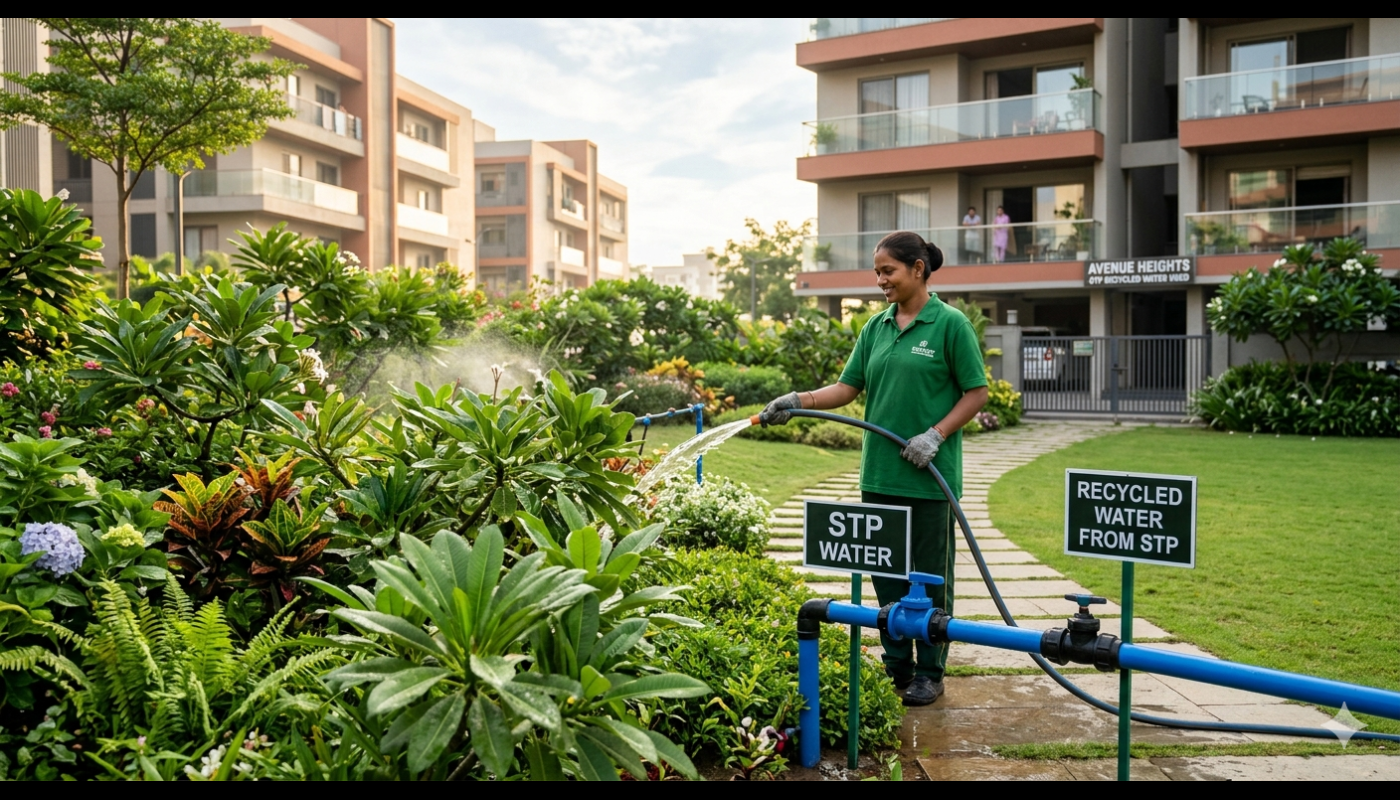
A septic tank is a simple underground chamber that relies on gravity settling and natural bacterial breakdown — it provides only partial treatment, and the outflow still isn't safe for reuse or direct discharge without further treatment. An STP, by contrast, uses active biological and mechanical processes (aeration, filtration, and often disinfection) to treat wastewater to a much higher standard, producing water clean enough to reuse for gardening or flushing. Septic tanks also require periodic desludging by tanker as solids build up, while a well-maintained STP handles sludge management as part of its ongoing process, with far more consistent output quality.
Why STPs Are Becoming Essential
Many residential projects, commercial complexes, hospitals, hotels, and institutions are now required to install STPs to comply with environmental regulations and sustainable water management practices.
Advantages of an STP
- Produces treated water suitable for gardening and flushing
- Reduces freshwater consumption
- Minimizes environmental impact
- Supports regulatory compliance
- Improves project sustainability ratings
Common Problems Faced by Housing Societies
Poor Commissioning
Some systems are installed but never properly started, leading to inefficient treatment and operational issues.
Lack of Maintenance
Without regular monitoring and maintenance, treatment performance gradually declines.
No Water Reuse Strategy
Many societies discharge treated water instead of utilizing it for landscaping and flushing, increasing water costs.
How Renora Hydrotech Helps
Renora Hydrotech provides complete STP solutions for housing societies across Surat and Gujarat, including design, installation, commissioning, operator training, and maintenance support. Our systems are designed for reliable performance and maximum water reuse.
Conclusion
For modern residential and commercial developments, STPs offer a sustainable and compliant solution for wastewater management. Investing in a properly designed STP helps reduce costs, conserve water, and meet environmental standards.
Talk to Renora Hydrotech about designing or upgrading an STP for your housing society.
